Nebraska Blog

Sample Page

Author: admin

  • How to Develop a Growth Mindset for Learning
    How to Develop a Growth Mindset for Learning

    Developing a growth mindset for learning can transform the way you approach challenges, setbacks, and personal development. Instead of believing Trang chủ Hubet that intelligence and ability are fixed, a growth mindset helps you understand that skills can improve with effort, practice, and the right strategies. Whether you are a student, professional, or lifelong learner, building this mindset can increase motivation, confidence, and long-term success.

    What Is a Growth Mindset?

    A growth mindset is the belief that your abilities can develop over time through dedication, learning, and persistence. The concept was popularized by psychologist Carol Dweck, who found that people who believe they can improve are more likely to embrace challenges and recover from failure.

    In contrast, a fixed mindset assumes that talent, intelligence, or ability are unchangeable. Someone with a fixed mindset might say, “I’m just not good at math,” or “I’ll never be a strong writer.” A person with a growth mindset might say, “I’m not good at this yet, but I can improve with practice.”

    That small word—“yet”—is powerful. It opens the door to progress.

    Why a Growth Mindset Matters for Learning

    A growth mindset for learning helps you stay motivated even when tasks become difficult. Learning often involves confusion, mistakes, and repetition. If you believe struggle means failure, you may give up too soon. But if you see struggle as part of the learning process, you are more likely to keep going.

    This mindset also improves problem-solving. Instead of avoiding hard subjects, you begin to ask better questions: What strategy can I try next? What feedback can I use? What can this mistake teach me?

    Over time, a growth mindset can help you become more resilient, adaptable, and confident in your ability to learn new things.

    Recognize Your Fixed Mindset Thoughts

    The first step to developing a growth mindset is noticing when fixed mindset thoughts appear. These thoughts are often automatic, especially when you face a difficult assignment, receive criticism, or compare yourself to others.

    Common fixed mindset thoughts include:

    – “I’m not smart enough.”

    – “This is too hard for me.”

    – “Other people are naturally better at this.”

    – “If I fail, it means I’m not capable.”

    – “There’s no point in trying.”

    Once you recognize these thoughts, you can challenge them. Replace “I can’t do this” with “I can learn how to do this.” Replace “I failed” with “I found something I need to practice.” This shift may feel small, but it changes how your brain responds to learning.

    Embrace Challenges Instead of Avoiding Them

    One of the best ways to build a growth mindset for learning is to choose challenges intentionally. Difficult tasks stretch your abilities and help you discover what you need to improve.

    Start by setting learning goals that push you slightly beyond your comfort zone. For example, if you are learning a language, try having a short conversation instead of only memorizing vocabulary. If you are improving your writing, submit your work for feedback rather than keeping it private.

    Challenges should not be overwhelming, but they should require effort. Growth happens when you practice skills that are just beyond your current level.

    Learn to See Mistakes as Feedback

    Mistakes are not proof that you are incapable. They are information. Every mistake shows you where your understanding is incomplete and where your next opportunity for growth begins.

    To develop a healthier relationship with mistakes, ask yourself:

    – What went wrong?

    – What can I do differently next time?

    – What skill do I need to strengthen?

    – Who can help me understand this better?

    When you treat mistakes as feedback, failure becomes less frightening. You begin to see learning as a process rather than a test of your worth.

    Focus on Effort, Strategy, and Progress

    A growth mindset does not mean simply trying harder. Effort is important, but effective learning also requires the right strategies. If one method is not working, try another.

    For example, if rereading notes is not helping you remember information, use active recall, flashcards, practice tests, or teaching the topic to someone else. If you are struggling with a skill, break it into smaller parts and practice each part separately.

    Track your progress over time. Even small improvements matter. When you notice progress, you build confidence and reinforce the belief that learning is possible.

    Seek Feedback and Use It Well

    Feedback is one of the most valuable tools for growth. However, many people avoid feedback because they fear criticism. To develop a growth mindset, learn to view feedback as guidance rather than judgment.

    Ask teachers, mentors, managers, or peers for specific advice. Instead of asking, “Was this good?” ask, “What is one thing I can improve?” or “Which part needs more clarity?” Specific feedback gives you a clear path forward.

    When you receive feedback, pause before reacting emotionally. Look for useful information, apply it, and measure whether it improves your performance.

    Surround Yourself With Growth-Minded People

    Your environment influences your mindset. If you spend time with people who value learning, effort, and improvement, you are more likely to adopt the same attitude.

    Look for communities where people ask questions, share resources, and celebrate progress. This could be a study group, professional network, online course, or mentorship program. Being around growth-minded people reminds you that everyone is learning and improving in different ways.

    Practice Patience and Consistency

    Developing a growth mindset for learning takes time. You will not change your thoughts overnight, and you may still feel discouraged sometimes. That is normal.

    The key is consistency. Keep showing up, practicing, reflecting, and adjusting your approach. Over time, your mindset will become stronger, and learning will feel less intimidating.

    Remember that progress is not always fast or obvious. Some skills take months or years to develop. Patience helps you stay committed long enough to see meaningful results.

    Final Thoughts

    Learning is not about being perfect from the beginning. It is about improving through effort, curiosity, and persistence. By recognizing fixed mindset thoughts, embracing challenges, learning from mistakes, and using feedback wisely, you can develop Nổ hũ quyết chiến tiền thưởng a growth mindset for learning.

    The more you practice this mindset, the more confident and capable you become. Instead of asking, “Am I good at this?” start asking, “How can I get better?” That question is the foundation of lifelong learning.
     

  • How Wildlife Supports Healthy Ecosystems

    How Wildlife Supports Healthy Ecosystems

    Wildlife plays a vital role in keeping Trang chủ TG88 nature balanced, productive, and resilient. From bees pollinating flowers to wolves regulating prey populations, wild animals help ecosystems function in ways that support clean air, fresh water, fertile soil, and stable food chains. Healthy ecosystems depend on the relationships between plants, animals, microorganisms, water, and climate. When wildlife disappears, these relationships can weaken, causing problems that affect both the natural world and human communities.

    Understanding how wildlife supports healthy ecosystems helps us appreciate the importance of conservation, biodiversity, and sustainable living.

    What Is a Healthy Ecosystem?

    A healthy ecosystem is a natural environment where living and nonliving elements work together in balance. Forests, grasslands, oceans, wetlands, rivers, and deserts are all ecosystems. Each contains plants, animals, fungi, bacteria, soil, water, and air that interact in complex ways.

    In a healthy ecosystem, species populations remain relatively stable, nutrients cycle efficiently, and habitats can recover from natural disturbances such as storms, fires, or seasonal changes. Wildlife is essential to this balance because animals influence food webs, plant growth, soil health, seed movement, and disease control.

    Wildlife Maintains Biodiversity

    Biodiversity refers to the variety of life in an ecosystem, including animals, plants, insects, fungi, and microorganisms. High biodiversity makes ecosystems stronger and more adaptable. When many species are present, an ecosystem is better able to withstand threats such as climate change, disease, invasive species, and habitat loss.

    Wildlife supports biodiversity by filling different ecological roles. Predators, herbivores, scavengers, pollinators, and decomposers all contribute to the natural balance. For example, birds may control insect populations, while large herbivores shape grasslands through grazing. Every species has a part to play, and even small animals can have major effects on ecosystem health.

    Pollination Supports Plant Growth

    One of the most important ways wildlife supports healthy ecosystems is through pollination. Pollinators such as bees, butterflies, moths, birds, bats, and beetles transfer pollen from one flower to another, allowing plants to reproduce.

    Pollination is essential for wild plants and agricultural crops. Many fruits, vegetables, nuts, and seeds depend on animal pollinators. In natural ecosystems, pollination helps maintain plant diversity, which provides food and shelter for countless other species.

    Without pollinators, many plants would decline, reducing food sources for herbivores and disrupting entire food webs. Protecting pollinator habitats is therefore critical for both ecosystem health and human food security.

    Seed Dispersal Helps Forests and Grasslands Regenerate

    Wildlife also helps plants spread through seed dispersal. Animals such as birds, monkeys, deer, bears, squirrels, and bats eat fruits and carry seeds to new locations. Some seeds pass through the digestive system and are deposited in nutrient-rich droppings, giving them a better chance of growing.

    Seed dispersal allows forests, grasslands, and wetlands to regenerate naturally. It helps plants colonize new areas, recover after disturbances, and maintain genetic diversity. For example, many tropical trees rely on animals to move their seeds. If these animals disappear, the forest may struggle to renew itself.

    Predators Keep Food Chains Balanced

    Predators are essential for healthy ecosystems because they help control prey populations. Wolves, lions, sharks, owls, foxes, and other predators prevent herbivores or smaller predators from becoming too numerous.

    When prey populations grow unchecked, they can overgraze vegetation, damage habitats, and reduce plant diversity. A well-known example is the reintroduction of wolves to Yellowstone National Park. Wolves helped regulate elk behavior and numbers, allowing vegetation in some areas to recover. This benefited birds, beavers, insects, and other wildlife.

    Predators also improve prey populations by often targeting weak, sick, or old individuals. This natural selection can help maintain healthier animal communities.

    Scavengers and Decomposers Recycle Nutrients

    Scavengers and decomposers play a critical role in cleaning ecosystems and recycling nutrients. Scavengers such as vultures, hyenas, crabs, crows, and beetles feed on dead animals. By doing so, they remove carcasses that could otherwise spread disease.

    Decomposers, including insects, worms, fungi, and bacteria, break down dead plants and animals into simpler substances. These nutrients return to the soil and support new plant growth. This process is essential for fertile soil, productive forests, and healthy grasslands.

    Without scavengers and decomposers, waste would accumulate, nutrient cycles would slow, and ecosystems would become less productive.

    Wildlife Improves Soil Health

    Healthy soil is the foundation of many ecosystems. Wildlife helps create and maintain soil by digging, burrowing, grazing, and decomposing organic matter. Earthworms aerate soil and improve water movement. Ants and termites break down plant material and mix nutrients into the ground. Burrowing animals such as prairie dogs and rabbits loosen compacted soil, allowing roots to grow more easily.

    Large grazing animals can also benefit soil when their populations are balanced. Their manure adds nutrients, while their movement can help press seeds into the ground. In this way, wildlife contributes directly to soil fertility and plant growth.

    Aquatic Wildlife Keeps Water Ecosystems Healthy

    Wildlife is just as important in rivers, lakes, wetlands, and oceans. Fish, amphibians, shellfish, aquatic insects, and marine mammals all support water ecosystem health.

    For example, oysters and mussels filter water, improving clarity and quality. Beavers build dams that create wetlands, which store water, reduce flooding, and provide habitat for many species. Fish move nutrients through aquatic food webs, while amphibians help control insects and serve as indicators of environmental health.

    Marine wildlife also plays a major role. Coral reef species maintain reef balance, sharks regulate ocean food chains, and whales help cycle nutrients through the sea.

    Wildlife Helps Control Pests and Disease

    Many wild animals naturally control pests. Birds, bats, frogs, spiders, and insects feed on mosquitoes, crop pests, and other species that can become harmful when populations grow too large.

    This natural pest control reduces the need for chemical pesticides, which can harm soil, water, and non-target species. Healthy wildlife populations can also reduce disease risks by maintaining balanced ecosystems. When biodiversity declines, certain disease-carrying species may become more dominant, increasing the chances of disease transmission.

    Why Protecting Wildlife Matters

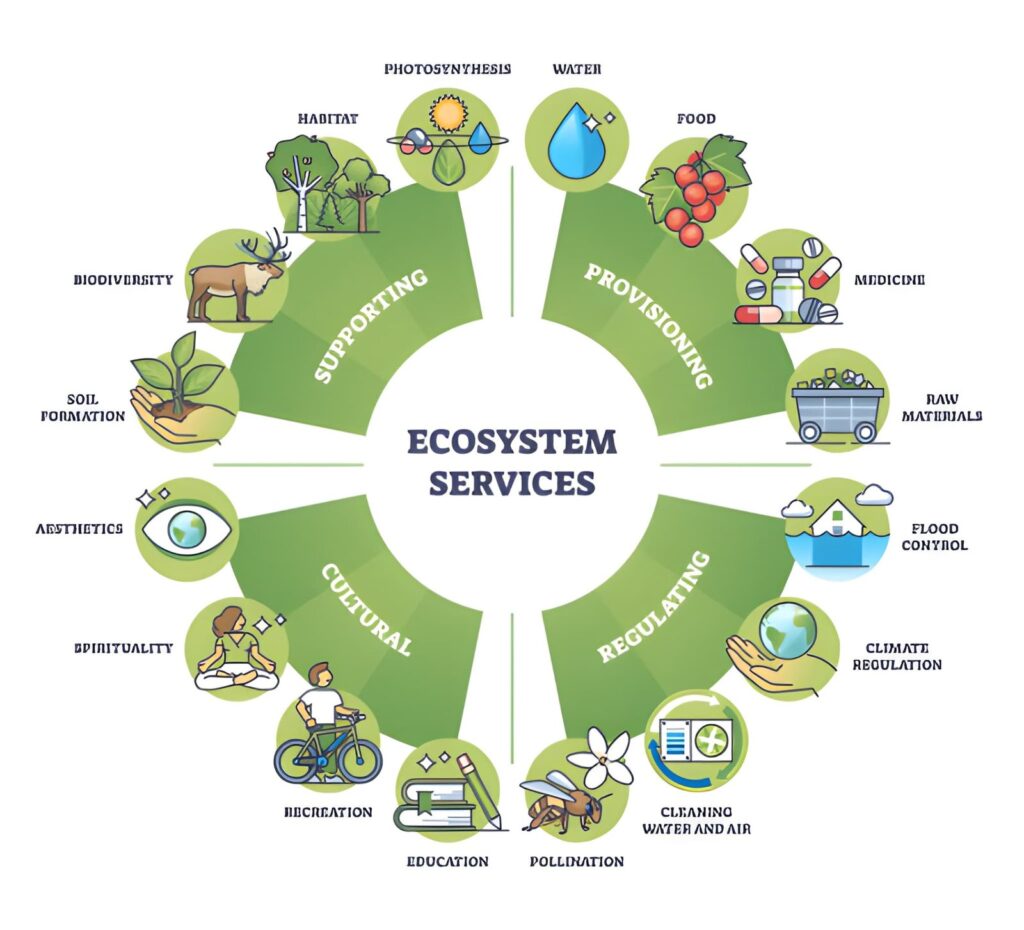
    Protecting wildlife is not only about saving individual species. It is about preserving the natural systems that support life on Earth. Healthy ecosystems provide essential services, including clean water, food production, carbon storage, flood protection, climate regulation, and recreation.

    Threats such as habitat destruction, pollution, climate change, overhunting, and invasive species continue to harm wildlife worldwide. Conservation actions like protecting habitats, restoring native plants, reducing pollution, supporting sustainable farming, and creating wildlife corridors can help ecosystems recover.

    Conclusion

    Wildlife supports healthy ecosystems in countless ways. Animals pollinate plants, disperse seeds, balance food chains, recycle nutrients, improve soil, clean water, and control pests. Each species contributes to the stability and resilience of nature.

    By protecting wildlife and preserving biodiversity, we protect Rút tiền TG88 the ecosystems that provide clean air, fresh water, fertile soil, and food. A healthy planet depends on thriving wildlife, and the future of both nature and humanity relies on keeping ecosystems balanced and alive.

  • Climate Change and Its Impact on Wildlife

    Climate Change and Its Impact on Wildlife

    Trang chủ King88 change is one of the greatest environmental challenges of our time, and its effects are being felt across every ecosystem on Earth. Rising temperatures, shifting weather patterns, melting ice, and changing ocean conditions are transforming the natural world at an alarming rate. While humans are increasingly aware of how climate change affects agriculture, health, and economies, its impact on wildlife is just as serious. Animals, birds, fish, insects, and plants all depend on stable habitats and predictable seasonal patterns to survive. As the climate changes, many species are being forced to adapt, migrate, or face extinction.

    How Climate Change Affects Wildlife

    Wildlife has evolved over thousands of years to live in specific environmental conditions. Many animals rely on certain temperatures, food sources, breeding seasons, and migration routes. Climate change disrupts these natural systems. Even small changes in temperature or rainfall can affect the availability of food, water, and shelter.

    For example, warmer temperatures may cause flowers to bloom earlier than usual. This can create problems for insects and birds that rely on those plants at specific times of the year. If animals cannot adjust their behavior quickly enough, they may struggle to find food or reproduce successfully.

    Habitat Loss and Changing Ecosystems

    One of the biggest impacts of climate change on wildlife is habitat loss. As temperatures rise, many habitats are changing or disappearing. Forests may become drier and more vulnerable to wildfires. Wetlands may shrink due to drought. Coral reefs may die because of warmer and more acidic oceans.

    Arctic and polar regions are among the most affected areas. Polar bears, seals, and penguins depend on sea ice for hunting, resting, and breeding. As ice melts earlier and forms later each year, these animals have less time to find food and raise their young. Polar bears, in particular, must travel longer distances to hunt, which can lead to exhaustion and lower survival rates.

    In tropical regions, climate change threatens rainforests and the countless species that live there. Many rainforest animals have limited ranges and cannot easily move to cooler areas. When their habitat changes, they may have nowhere else to go.

    Disrupted Migration Patterns

    Many species migrate to find food, reproduce, or avoid harsh weather. Birds, whales, butterflies, and fish follow seasonal patterns that have existed for generations. However, climate change is altering these patterns.

    Warmer temperatures can cause birds to migrate earlier or later than usual. If they arrive at breeding grounds before food is available, their chicks may not survive. Similarly, fish species may move to cooler waters, affecting both marine ecosystems and human communities that depend on fishing.

    The monarch butterfly is a well-known example. Its migration depends on temperature, wind patterns, and the availability of milkweed plants. Climate change, combined with habitat destruction, has made this journey more difficult and has contributed to population declines.

    Food Chain Disruptions

    Climate change can also disturb food chains. When one species declines, the effects can spread throughout an entire ecosystem. Predators may lose their prey, and plants may lose pollinators. These changes can weaken biodiversity and make ecosystems less stable.

    In the ocean, warming waters affect plankton, which are tiny organisms at the base of the marine food chain. Many fish, whales, and seabirds depend on plankton either directly or indirectly. If plankton populations shift or decline, larger animals may struggle to find enough food.

    On land, droughts can reduce plant growth, leaving herbivores with less to eat. When herbivore populations decline, predators such as wolves, lions, or eagles may also suffer. This shows how closely connected wildlife species are within their environments.

    Increased Risk of Extinction

    Climate change increases the risk of extinction for many species, especially those that are already endangered. Animals with small populations, limited habitats, or specialized diets are particularly vulnerable. Species that live on islands, mountains, or in polar regions often have fewer options for relocation.

    Mountain animals, for instance, may move to higher elevations as temperatures rise. But eventually, they may reach the top of the mountain and have nowhere else to go. This is sometimes called the “escalator to extinction.”

    Amphibians such as frogs and salamanders are also at high risk. They are sensitive to changes in temperature and moisture, and many are already threatened by disease and habitat loss. Climate change can make these threats worse.

    Ocean Wildlife and Climate Change

    Marine wildlife is heavily affected by climate change. Oceans absorb much of the heat and carbon dioxide produced by human activities. This causes ocean warming and acidification, both of which threaten marine life.

    Coral reefs are especially vulnerable. When water becomes too warm, corals expel the algae that give them color and nutrients, a process known as coral bleaching. If bleaching lasts too long, corals can die. Since coral reefs provide shelter and food for thousands of marine species, their loss has widespread consequences.

    Sea turtles are another example. The temperature of sand affects the sex of turtle hatchlings. Warmer beaches can lead to more female turtles being born, creating an imbalance that may affect future populations.

    What Can Be Done to Protect Wildlife?

    Protecting wildlife from climate change requires global and local action. Reducing greenhouse gas emissions is the most important step. This means using cleaner energy, improving energy efficiency, protecting forests, and reducing pollution.

    Conservation efforts are also essential. Creating wildlife corridors can help animals move safely to new habitats. Protecting national parks, forests, wetlands, and marine areas gives species a better chance to survive. Restoring damaged ecosystems, such as coral reefs and wetlands, can also strengthen wildlife populations.

    Individuals can help by reducing energy use, supporting sustainable products, planting native species, reducing plastic waste, and supporting conservation organizations. Public awareness and education are important because people are more likely to protect wildlife when they understand what is at stake.

    Conclusion

    Climate change and its impact on wildlife is a serious global issue that affects every part of the natural world. From melting Arctic ice to warming oceans and shrinking forests, animals are facing challenges that threaten their survival. Habitat loss, disrupted migration, food shortages, and increased extinction risks are all signs of a rapidly changing planet.

    Tải app King88 plays a vital role in maintaining healthy ecosystems, and protecting it benefits both nature and humanity. By taking action to reduce climate change and conserve natural habitats, we can help ensure that future generations inherit a planet rich in biodiversity and life.

  • Hello world!

    Welcome to WordPress. This is your first post. Edit or delete it, then start writing!